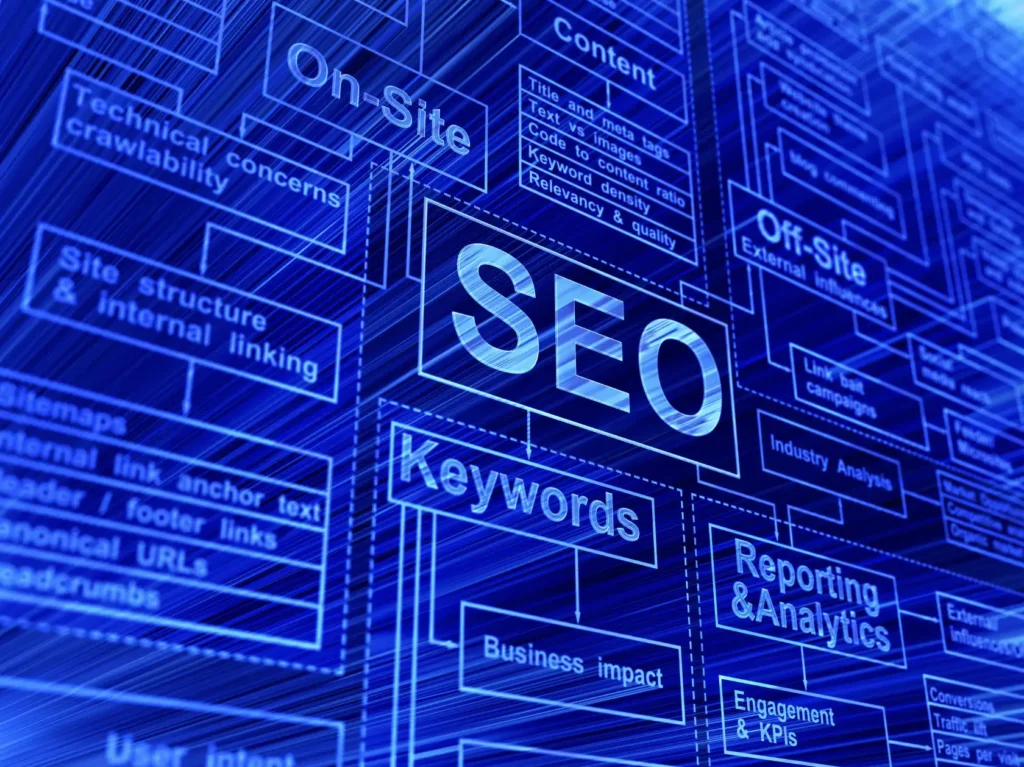

The term used for optimising websites is search engine optimisation or SEO. Simply said, search engine optimisation or SEO is the act of making changes to your website so that it appears more prominently in Google, Microsoft Bing, and other search engines whenever someone searches for:
- The services you offer
- Products you sell
- Help and advise on various topics
Your chances of being seen and clicked on increase with the visibility of your pages in search results. The ultimate objective of search engine optimisation is to assist in drawing in website visitors who will either become repeat customers, clients, or customers.
What distinguishes SEO from Pay Per Click and SEM?
Two additional phrases you’ll likely come across in the greater search marketing community and here on Search Engine Land are SEM and PPC.
SEO vs SEM Search Engine Marketing
Search engine marketing, or search marketing as it is more widely called, is what SEM is a catch-all word for a mix of PPC and SEO efforts designed to increase visitors through both sponsored and organic search.
To put it simply, search marketing is the act of using both paid and unpaid search engine optimisation techniques to increase exposure and traffic.
Thus, what distinguishes SEO from SEM? In a technical sense, they are identical; SEO is merely half of SEM:
SEO drives organic traffic from search engines.
SEM drives organic and paid traffic from search engines.
This is where things start to become a little unclear. SEM and PPC are frequently used interchangeably these days; we’ll discuss PPC in the next section.
This concept appears to outperform SEO. But marketing nonetheless—just like PPC is—is what SEO is. The ideal way to approach SEO and SEM is as follows:
Consider SEM to be a coin. One side of the coin is SEO. On the other hand is PPC.
SEO Search Engine Optimisation vs. PPC
PPC, or pay-per-click, is a kind of online advertising in which sponsors are billed each time a link in their ad is clicked.
Basically, when an advertiser wants their ad to show up in search engine results, they bid on particular keywords or phrases. The advertiser’s ad will show up as one of the top results when a user searches for one of those terms or phrases.
Thus, if search engine marketing is like a coin, then PPC and SEO are its two sides; PPC is the side that is paid, and SEO is the side that is unpaid.
Another crucial thing to remember is that these are complementary channels, therefore it’s never appropriate to compare SEO and PPC or decide which is superior. This is not a binary question.
Why is search engine optimisation / SEO important?
One essential marketing channel is search engine optimisation. First and foremost, 53% of all website traffic comes from organic search.
That’s a major factor in the prediction that the global search engine optimisation market would grow to an astounding $122.11 billion by 2028. For companies of all sizes, brands, and enterprises, SEO produces tangible commercial outcomes.
People usually start their journey with a search if they want to go someplace, do something, obtain information, perform research, or purchase a good or service.
However, search is very dispersed these days. Users have the option to search using social media sites like YouTube and TikTok, merchant websites like Amazon, or conventional web search engines like Google and Microsoft Bing.
As SEO professionals, we have achieved amazing results for many of our clients in local areas such as Redditch, Birmingham, Bromsgrove.
Every year, trillions of searches are made. Being “search engine friendly” is crucial on any platform where customers can look for your brand or company. This is because search is frequently the main source of traffic for websites.
All of this indicates that increasing your visibility and outperforming your competitors in search results might have a favourable effect on your revenue.
Because search engine results pages, or SERPs, are so competitive and packed with search tools (as well as PPC ads), search engine optimisation is extremely crucial.
For brands and companies, search engine optimisation is especially important because, in contrast to other marketing avenues, quality optimisation work has a long shelf life. The traffic ceases when a sponsored campaign stops. Social media traffic is, at best, unpredictable and far less than it formerly was.
The cornerstone of holistic marketing is search engine optimisation, which means that everything your business does counts. Once you are aware of what your users desire, you can apply that understanding throughout your
- Ads (both sponsored and natural).
- Content on websites.
- Properties on social media.
One way to get the traffic you need to meet important business objectives is through SEO (e.g., conversions, visits, sales). Additionally, it fosters trust since highly ranked websites are typically seen as reliable and authoritative, two qualities that Google actively seeks to promote.