
Brand design is something we do every day. Whether it is a new business or a rebrand, we always strive to produce a design that is eye catching and follows the brief. When it comes to rebrands, we always ask the question as to why they want it. Sometimes it is obvious, as the design is quite dated, but in other instances, the rebrand could just be made to simplify the logo.
The Lyle and Tate saga with their new logo is a different story altogether, as the original logo dates back 141 years and members of the family are not happy with the new design.
An ancestor of Lyle’s Golden Syrup’s inventor has criticised the new brand design as “feeble and woolly” and stressed that “don’t junk a classic.”
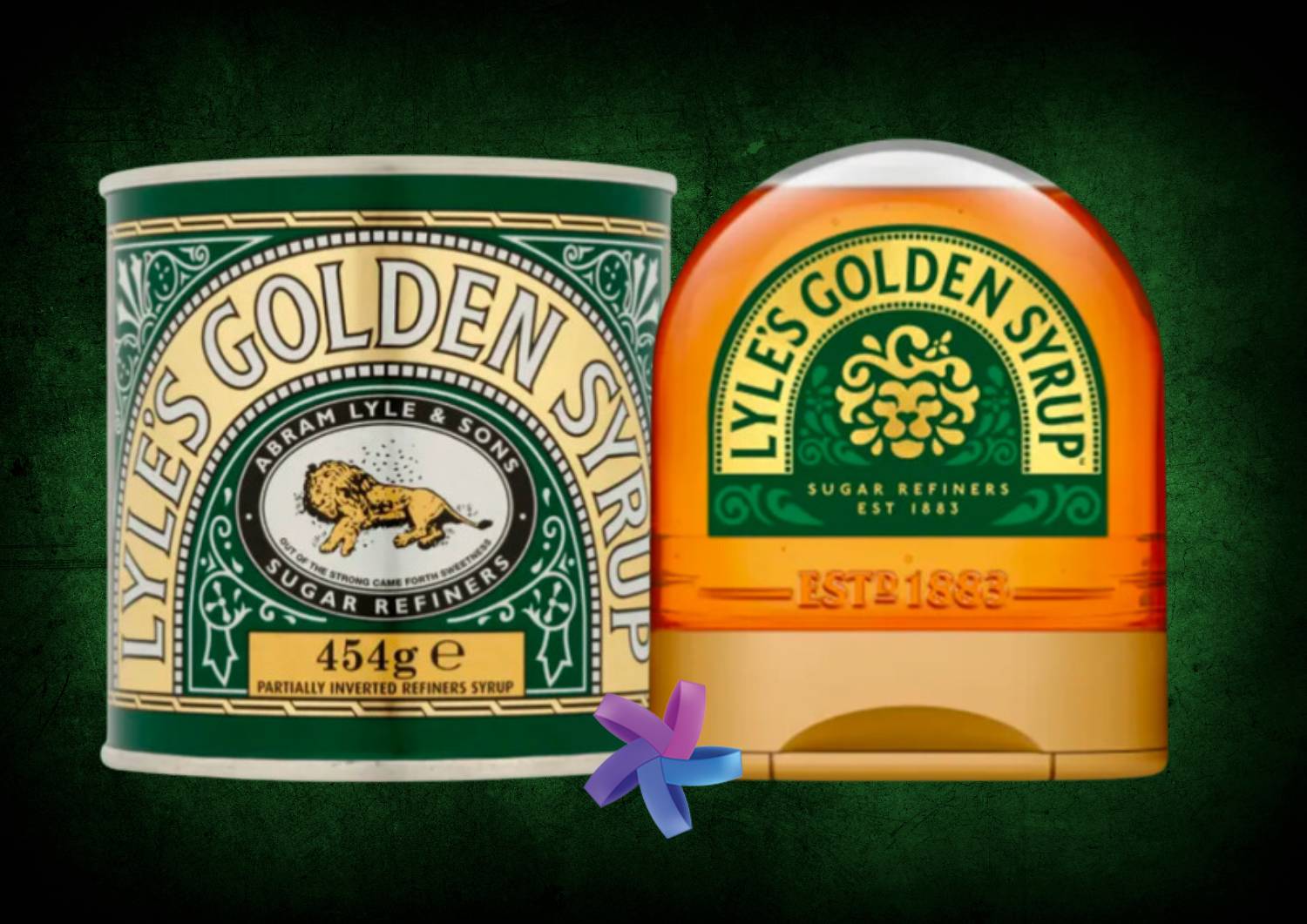
Alexander Linklater questioned why the designers had chosen to “throw away 141 years of proven branding” after his great-great-great grandpa Abram Lyle created the original dark green and gold packaging featuring a dead lion being swarmed by bees in 1883.
In an attempt to appeal to a “21st-century audience,” Tate & Lyle Sugars, the company that owns Lyle’s Golden Syrup, changed the logo to depict a rather abstract lion’s face with a solitary bee hovering around its mane.
The Old Testament tale of Samson severing an attacking lion with his bare hands is alluded to in Lyle’s original artwork.
When Samson returns, he discovers that an infestation of bees has built a hive within the carcass, and he gathers the honey for his parents and himself.
The biblical passage from the tale “Out of the strong came forth sweetness” is included on the box.
With nearly no changes made since 1883, it is the oldest brand packaging in the world and a Guinness World Record.
The whole product line was rebranded by Tate and Lyle, with the exception of the classic tin, which still features its original artwork.
The corporation was advised by Mr. Linklater, a 55-year-old journalist and biographer, to “don’t junk a time-proven classic design.”
“They are changing something that is both very distinctive and familiar to something generic and woolly,” he stated to The Telegraph.
It was the oldest brand identity in Britain. The rebranding represents a departure from a significant period in the company’s history.
The weak, woolly-shaped lion is not very good, in my opinion. Why discard 140 years of established branding?
Mr. Linklater said that his ancestor hated Henry Tate, their business partner, and that the two could only combine their businesses after Lyle’s passing.
According to him, nothing is left of his great-great-grandfather’s original business now since death duties after World War II destroyed the company’s liquid assets.
Lyle was up in poverty in the industrial town of Greenock before moving to London. Mr. Linklater described Lyle as a genuinely pious lifelong teetotaler with “frightful temper and fierce morality.”
According to Mr. Linklater, Lyle was a Presbyterian who passed away from pneumonia in 1891. Thousands of people attended his burial in Greenock, where he had served as provost.
Church of England members criticised Tate & Lyle Sugars on Tuesday, claiming the company’s branding “eradicates” the Christian message in its emblem.
Tate & Lyle Sugars expressed regret for any distress created and declared that religion had “no part” in the choice to alter the brand design.
“We’re excited to unveil a fresh redesign for the Lyle’s Golden Syrup brand,” stated James Whiteley, brand director for Lyle’s Golden Syrup.
“Consumers need to see businesses adapting to the needs of the modern world, even as we’ll be honouring our history tin and original branding.
Sleek New Brand Design
“Our sleek, clean brand design pulls Lyle’s into the present era, making it accessible to the average British household while maintaining a nostalgic and true Lyle’s vibe.
“We’re confident that the fresh new design will make it easier for consumers to discover Lyle’s as an affordable, everyday treat while re-establishing the brand as the go-to syrup brand for the modern UK family, featuring the same delicious taste that makes you feel Absolutely Golden.”
Pepsi New brand Design

The legendary worldwide brand Pepsi is releasing a new brand design and logo refresh. This is the first update to the classic Pepsi globe logo design in fourteen years.
With an eye towards the future, Pepsi will introduce the new style globally in 2024 and in North America this autumn, coinciding with the 125th anniversary of the company.
The new design, which will be used across all physical and digital touchpoints such as packaging, cooler and fountain equipment, fleet, apparel, and eating areas, transforms the Pepsi brand to reflect its most joyful and unapologetic aspects.
The adaptable Pepsi logo’s new visual brand design has gone viral online. It has won praise from critics for its strong branding, which combined the greatest aspects of Pepsi’s history with contemporary, trend-forward elements.
The logo’s retro style pays homage to the recollections of those of us who grew up in the 1980s and 1990s.
The new style, according to its developer, aims to combine the best elements of the previous and current eras. So let’s assess their performance. This is one of those situations when it’s important to interpret the findings carefully.
Consumers are not interested in the rebrand but they like the new brand design
With ratings of 64% and 65%, respectively, the need to learn more and significance are dragging down the overall score, which is below average. This could suggest that consumers do not find the rebranding event to be as significant as Pepsi would have us believe. The general public is obviously not as excited about it as the expert community is.
Even yet, they responded favourably to the design when it was shown to them, despite their lack of interest in the event itself. All significant indicators, including novelty (69%), credibility (83%), buy intent (72%), and willingness to tell others (70%), were all in the “green” above average range.